
Your child is bright, curious, and full of possibility. You see it every day, even in the moments that feel hard. And like many Chicago parents you watch your child work incredibly hard at tasks that seem to come really easy to others.
There are other things too. You notice your child loses their homework, forgets instructions, and gets overwhelmed when plans change. Your gut is telling you something is off. Trust your instincts. These moments have a name, an explanation, and best of all, a path forward. It’s called executive functioning.
Executive functioning skills are the brain’s “management system.” They’re the tools children use to plan, organize, start tasks, shift between activities, manage emotions, and stay focused.
When these skills are still developing, everyday routines can feel harder than they should. But here’s the best part: executive functioning can be taught, nurtured, and strengthened, just like any muscle that grows stronger with practice.
In this guide, we’ll explore what executive functioning looks like in daily life, why it matters for your child’s success and independence, and practical strategies you can start using today.
We’ll also share how specialized environments like Merlin Day Academy help neurodiverse learners flourish.
If you’d like more personalized insights, please contact us today. We’re here to help support you every step of the way!
What Executive Functioning Really Means
Think of executive functioning as your child’s internal air traffic controller. It guides incoming information, decides what deserves attention, and keeps everything moving in the right order.
As this system grows stronger, children begin to start homework, remember their backpack, and roll with changes more smoothly.
Every child builds these skills throughout childhood, each on their own timeline. Some children simply need a little more support along the way, especially those with ADHD, Autism Spectrum Disorder (ASD), Obsessive Compulsive Disorder (OCD), depression, anxiety, or other neurodiverse learning needs.
For these children, that air traffic controller works differently, and that difference is part of what makes them wonderfully unique.
Here’s the encouraging truth to hold onto: executive functioning skills can and do grow stronger. With the right strategies, a supportive environment, and steady encouragement, your child can build the very tools they need to shine.
What Executive Functioning Challenges Look Like
Understanding what to look for is the first bright step toward meaningful growth. You might notice your child:
- Learning to organize school materials
- Building the skill of following multi-step directions
- Working to start or finish tasks
- Feeling big feelings during transitions between activities
- Developing the ability to manage strong emotions
- Growing their sense of time and how long tasks take
- Practicing how to remember assignments, deadlines, and routines
It’s so important to understand what these moments are, and what they aren’t. They’re never signs of laziness or a lack of caring. They’re simply areas ready for growth, deserving of patience, understanding, and loving structure.
In fact, many outbursts or moments of resistance are your child’s brave way of saying “I’m overwhelmed” or “I need help.” When a task feels big or the world feels loud, the stress adds up. When you gently shift from “my child won’t” to “my child is learning and needs support,” something beautiful happens. Compassion replaces frustration, and connection grows.
Six Practical Strategies to Support Executive Functioning at Home
You know your child better than anyone in the world. These simple, flexible strategies work wonderfully for neurodiverse learners and can be tailored for children with ADHD, autism, anxiety, or other unique learning styles. Start with just one or two, then build from there. Every small step counts, and progress adds up faster than you might imagine.
1. Assist With Organization
Children often thrive with hands-on help learning to organize their materials. A predictable system lightens their mental load and helps your child feel confident and capable.
Try these encouraging approaches:
- Label folders and notebooks clearly
- Use color-coded tabs in binders
- Create a consistent backpack layout so everything has its place
- Set up a dedicated, clutter-free homework station at home
- Teach your child where each item “lives”
Consistency is the gentle key. When belongings have designated spots, whether it’s a shoe rack by the door or a labeled bin for supplies, children feel grounded, steady, and ready to grow.
2. Break Tasks Into Smaller Steps
Large assignments can feel like mountains, but every mountain is climbed one step at a time. Breaking a task into smaller, manageable pieces supports both planning and task initiation, which is simply the ability to get started.
You can:
- Create a step-by-step checklist
- Write out a timeline for each part of an assignment
- Help your child focus on just one step at a time
Try a warm “First-Then” approach, too. For example, “First we unpack your school bag, then you can have a snack.” This clear sequence motivates children and helps them taste success quickly. And each small success builds momentum, confidence, and a joyful sense of “I can do this.”
3. Use Checklists for Daily Routines
Checklists are wonderful tools for time management and prioritization. They help children see what needs to happen and in what order, transforming an overwhelming morning into a series of small, achievable victories.
Helpful examples include:
- A morning routine checklist
- A homework checklist
- An after-school responsibilities checklist
For younger children or visual learners, a picture-based checklist works beautifully, like an image of a toothbrush, then clothes, then a backpack. Children feel more in control when expectations are clear, predictable, and within reach.

4. Teach Self-Regulation Strategies
Self-regulation is your child’s growing ability to manage emotions, behaviors, and body movements. Movement breaks and sensory strategies help children reset and return to tasks refreshed and ready.
Try these calming, confidence-building tools:
- Stretching or short walks
- Deep breathing (inhale for four counts, hold for four, exhale for six)
- Chair push-ups or “heavy work” like carrying books
- Fidget tools or a weighted lap pad
- Grounding techniques that focus on the five senses
Building a small “sensory toolkit” with a few favorite items, such as noise-canceling headphones or a stress ball, gives your child a wonderful tool to reach for when big feelings arise. Over time, they’ll learn to reach for it all on their own.
5. Use a Visual Timer
A visual timer shows time passing, helping children understand how much longer a task will take. This simple, empowering tool eases transitions and supports focus.
Visual timers work especially well for:
- Homework
- Reading time
- Morning routines
- Breaks
Pair the timer with a gentle countdown, like “Five more minutes until clean-up.” That warm, predictable warning helps your child prepare for what’s next and feel ready instead of caught off guard.
6. Set Up the Environment for Success
Your child’s surroundings can lift them up in remarkable ways. A calm, organized space eases overwhelm and helps children feel ready to learn and shine.
Create a nurturing environment by:
- Removing clutter from the workspace
- Reducing visual distractions
- Minimizing background noise, or adding a white noise machine
- Offering noise-canceling headphones when needed
- Keeping supplies within easy reach
- Using soft, adjustable lighting instead of harsh fluorescent lights
A designated calm-down corner with a beanbag or weighted blanket gives your child a safe, cozy place to reset. Think of it as a little home base of comfort, always ready to welcome them back.
When Traditional Classrooms Aren’t Enough
These home strategies truly make a difference, and you should feel proud of every one you try. Still, some children flourish best with even more support than a traditional classroom can offer. If your child’s progress feels stalled despite accommodations, or if you’re carrying the weight of coordinating multiple therapy providers on your own, please hear this: you’ve done nothing wrong. In fact, you’ve done everything right by seeking what your child needs.
Some children simply bloom brightest in a specialized environment, one designed around neurodiversity, with therapeutic support woven warmly into the entire school day. That’s exactly why Merlin Day Academy in Chicago was created.
How Merlin Day Academy Supports Neurodiverse Learners
Merlin Day Academy is a sensory-integrated therapeutic school designed for children ages 6 to 14 with neurodiverse learning needs. This includes autism, ADHD, Down syndrome, intellectual disabilities, emotional disabilities, and executive functioning challenges. Our belief lights the way for everything we do: all children with disabilities can learn with the right instructional, environmental, and therapeutic support.
Families across Chicago choose Merlin Day Academy because of the individualized, comprehensive care we provide.
A Sensory-Integrated Therapeutic Environment
Our classrooms are thoughtfully designed to ease overwhelm and support regulation. Children learn in spaces that honor their sensory needs, with sensorimotor gyms, quiet rooms for breaks, and sensory retreat rooms. When the environment feels calm and predictable, children stay focused, engaged, and free to grow.
Individualized Executive Functioning Support
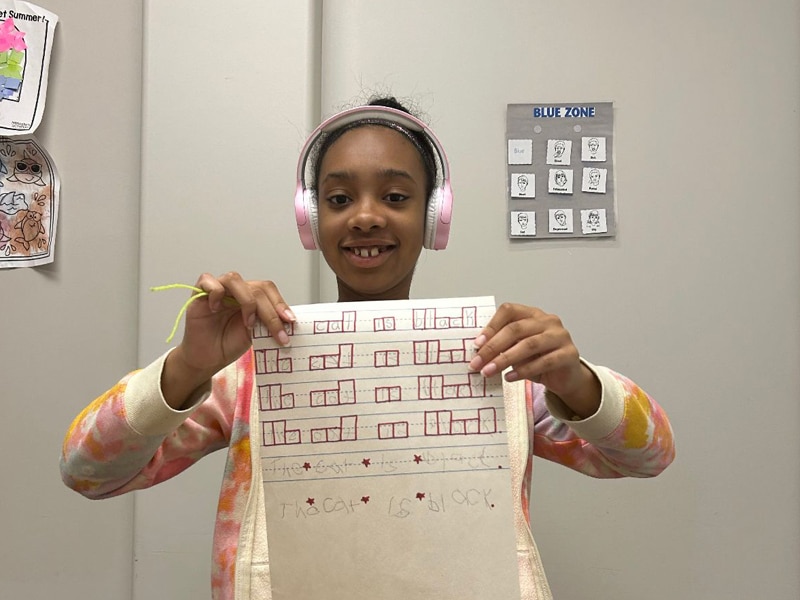
Executive functioning support isn’t a separate lesson at Merlin Day Academy. It’s woven joyfully into every part of the day. Our teachers and therapists partner together to help each student:
- Build organizational skills
- Learn practical time management strategies
- Practice emotional regulation
- Strengthen task initiation
- Improve flexibility and smoother transitions
Because every child is beautifully unique, we tailor these approaches to your child’s specific strengths and goals.
Therapeutic Services Throughout the Day
Merlin Day Academy provides therapeutic services throughout the school day. This integrated model means your child receives consistent, coordinated care from caring experts who truly understand their needs, all under one roof. Available services include:
- Occupational therapy – learning everyday skills, from using scissors to managing sensory input
- Applied Behavior Analysis (ABA) – teaching skills by breaking them into small, achievable steps
- Speech and language therapy – supporting clearer, more confident communication
- Physical therapy – building strength, balance, and coordination
- Nutrition and feeding therapy – helping children build healthy eating skills
- Social work – helping students express their feelings, understand challenges, and build essential skills to overcome the obstacles they face every day
A Team That Understands Neurodiversity
Our staff are specially trained to support children with autism, ADHD, anxiety, and other executive functioning challenges. We use trauma-informed, strengths-based approaches that help children feel safe, confident, and capable. Rather than focusing on what a child finds hard, we celebrate what makes each child unique and build from there.
Helping Your Child Thrive in Chicago
Executive functioning challenges can feel big for the whole family. But with the right support, your child can truly flourish, both in the classroom and in life. Every day holds new possibilities, and every child holds remarkable potential just waiting to unfold.
Whether you begin with a few strategies at home or explore a specialized program like Merlin Day Academy, hold onto this truth: progress is real, and it’s absolutely possible. Every checklist you create and every calm-down corner you build plants a seed that will grow into confidence, independence, and joy.
Chicago families deserve a school environment that understands neurodiversity, celebrates strengths, and provides therapeutic support every step of the way. Together, we can help your child grow into a confident, capable, thriving participant in their community.
Your next step: If you’d like to see how this works in person, schedule a tour of Merlin Day Academy. You’ll experience our sensory-friendly classrooms and meet the warm, dedicated team ready to partner with your family.
Frequently Asked Questions
Can executive functioning skills actually improve, or is my child stuck?
Your child is never stuck. Executive functioning skills grow stronger over time because they’re learnable skills, not fixed traits. With consistent strategies, a supportive environment, and loving guidance, children build stronger organization, time management, and emotional regulation. Progress looks different for every child, and that’s beautiful. With patience and the right support, meaningful growth is genuinely within reach.
How is Merlin Day Academy different from services my child receives at a mainstream school?
Free school services often mean large caseloads and separate, fragmented care. At Merlin Day Academy, therapy is woven right into natural learning activities rather than isolated into separate sessions. Our integrated model, small ratios, and coordinated team address the root of executive functioning challenges together. Families often celebrate meaningful, measurable progress that fragmented programs may miss.
Will my child be able to transition back to a mainstream classroom?
Our heartfelt goal is to prepare children for greater independence, never to create dependency. We intentionally design programs that build transition-ready skills, so your child develops the confidence and tools to succeed in less restrictive environments over time. You’re not limiting your child’s future. You’re opening more doors of possibility.
My child struggles with change. How do you handle transitions to a new school?
We deeply understand how big change can feel for children who find comfort in routine. That’s why we coordinate closely with your child’s current providers to keep things steady and familiar. Our predictable, sensory-friendly environment is thoughtfully designed for children who find change hard, helping them feel safe, welcomed, and settled from day one.
This post was originally published in October 2022 and was rewritten in September 2026 to include updated strategies.
